| |
| Tuesday, 20 October 2026 |
| Constantin Brancusi and 20th century sculpture |
| David Worthington |
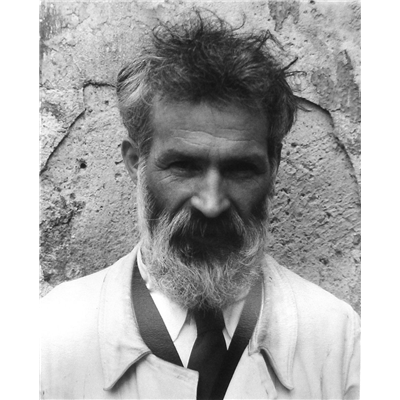 |
Brancusi was the son of a peasant from a mountainous province of Romania, yet he became an internationally famous artist and is now seen as one of, if not the, most important sculptors of the 20th century. How did this happen and what is so special about his work? Brancusi combined the Romanian wood working tradition with a Belles Arts fine art training. He also had an intuitive an understanding of the significance of engineered products. A great friend of the inventor of Conceptual art Marcel Duchamp, Brancusi is an enigmatic contradiction, and this will be explored in this lecture, along with his relevance to 20th century sculpture. Image Constantin Brâncusi by Edward Steichen 1921 PD |
|
| Tuesday, 17 November 2026 |
| Entertaining Angels Unaware -Angels in the Bible, Music and Art |
| Patrick Craig |
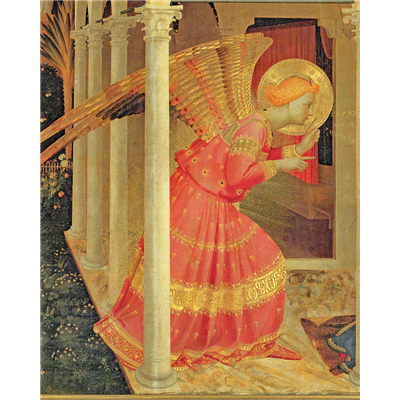 |
Angels don’t speak, they sing. And they have inspired much wonderful music. Patrick will investigate their roles as guardians, messengers and fighters through imaginative music by Britten, Elgar and Mendelssohn. Angelic words also feature in regularly repeated liturgical texts that Patrick sings daily in St Paul’s Cathedral, such as the Sanctus and Te Deum. These will give us an opportunity to explore and enjoy angelic music by composers such as Bach, Mozart and Walton. Patrick will call on some of the world’s finest art and poetry to further expand this journey into the heavenly realm. Fra Angelico, Annunciation of Cortona |
|
| Tuesday, 15 December 2026 |
| St Nicholas of Myra and Santa Claus: A Case of Mistaken Identity |
| Sally Dormer |
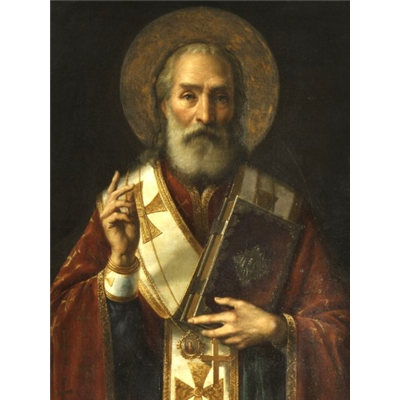 |
How did the remains of Nicholas, a fourth-century bishop from Myra, Turkey, reach Bari, Italy in 1087? And how did this rather obscure churchman become the patron saint of sailors, merchants, prisoners and children in the Byzantine Empire and Western Europe? This lecture explores the development of St Nicholas’ medieval cult through the artefacts associated with it: icons, wall paintings and illuminated manuscripts, and charts his eventual transformation into the well-loved Santa Claus. Jaroslav Čermák (1831 - 1878) - St. Nicholas |
|
| Tuesday, 12 January 2027 |
| Why the Romans could not afford to lose Britain |
| Sam Morehead |
 |
For centuries, scholars have pondered why Rome conquered and held on to the province of Britannia for almost 400 years. It is clear, from the time of Julius Caesar, Britain was to become a major stage on which Roman generals and emperors could parade their martial prowess, celebrating numerous victories over the, often, troublesome inhabitants of these Isles. It is also known from ancient sources that Britain was known for its wealth in metals and agriculture when the Romans invaded under Claudius in AD 43. Historians have subsequently made quite a play of the importance of Britain’s mineral wealth to the Romans. However, largely overlooked is Britain’s vital role as a source of food for the Romans on the Continent, especially in the late Roman period. Through numerous and varied artefacts, this lecture will show why Rome really needed Britain and how the Romans tried desperately to keep the province in the closing decades of the Western Roman Empire. |
|
| Tuesday, 16 February 2027 |
| Hot Stuff! The Birth of Studio Glass |
| Mark Hill |
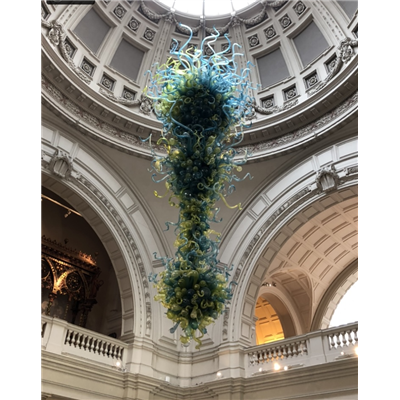 |
Although glass has been made for centuries, the 1960s saw a revolution in the way it was made, opening it up to artists across the world and allowing glass to be used as a medium for art. After looking at the historical context and the genesis of the movement, I examine the work of six key glass artists from the US and the UK, including Dale Chihuly, Sam Herman, and Peter Layton. Containing previously unseen photographs taken at the time, this talk also includes my top tips and an overview of the market today and the creative journey made by studio glassmakers so far. Chihuly at the V and A ( JW) |
|
| Tuesday, 23 March 2027 |
| Les Trois Grandes Dames’ of Impressionism: Marie Bracquemond, Mary Cassatt and Berthe Morisot |
| Sarah Burles |
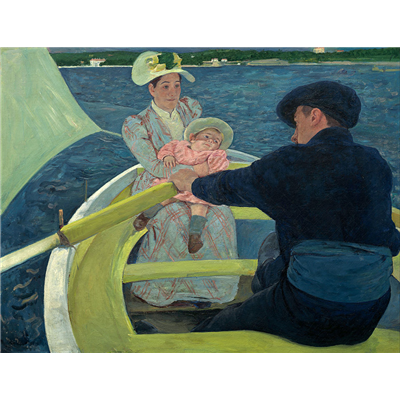 |
The Impressionists were an innovative and radical group of artists whose took Paris by storm in the 1870s. Using new colours and techniques, they created paintings of modern life which shocked and horrified the art establishment. From the start the group included women artists but their contribution to Impressionism has often been overshadowed by their male contemporaries. Marie Bracquemond, Berthe Morisot and Mary Cassatt all exhibited regularly at the Impressionist exhibitions alongside artists such as Monet, Renoir and Degas. The Boating Party Mary Cassatt NGA Washington PD |
|
| Tuesday, 13 April 2027 |
| Beautiful British Books |
| Dominic Riley |
 |
In this lecture Dominic tells the story of fine bindings in Britain over the last hundred years. The journey begins with William Morris and the Kelmscott Chaucer, possibly the last great book of the printed age. He will then show some of the amazing bindings from Sangorski and Sutcliffe, the finest bookbinders in the twentieth century, as well as work from their contemporaries. Dominic will then discuss the new world of Design Binding which emerged after the second world war, as modern design entered this ancient craft, and finish with examples from some of the best artistic bookbinders working today. |
|
| Tuesday, 25 May 2027 |
| "We are amused!" A Panorama of Victorian Leisure from the Parlour to the Seaside, via the Nursery. |
| Bertie Pearce |
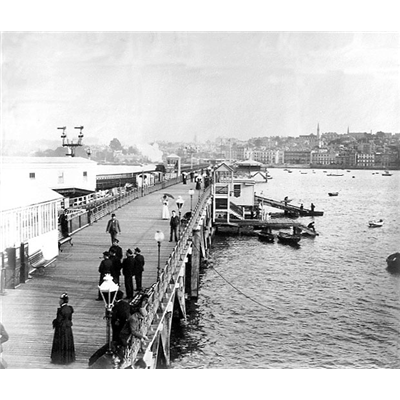 |
Even though ‘work’ was the bedrock of Victorian progress and improvement, Queen Victoria’s reign saw the greatest upsurge in leisure pursuits ever witnessed. People earned more money and worked shorter hours than ever before and with the birth of the Railways and a desire to be health conscious it was a golden age for the art of entertaining oneself and being an amateur in the true sense of the word. This talk celebrates a pre-television age when the ability to amuse and entertain was paramount. Image Ryde Pier 1897 National Archives |
|
| Tuesday, 22 June 2027 |
| The Echoing Scream -the Birth of Expressionism |
| Gavin Plumley |
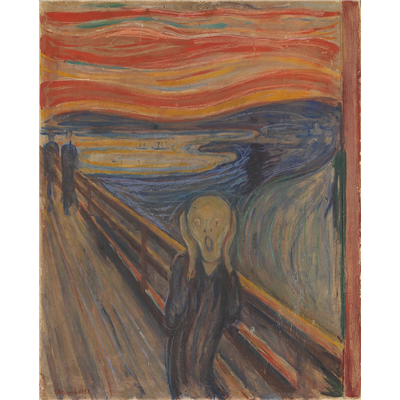 |
When Edvard Munch created The Scream in 1893, he was responding to an intense emotional experience. Today, we would call it a panic attack. Crippling and anxious making, this primal cry was also a rallying call: for Munch and for the wider world of art. It gave birth to a movement known as expressionism, showing life not at it is (realism) or as it might be perceived in a fleeting moment (impressionism), but as it is experienced within the unembellished core of our being. Explosive and emotive, the aftershocks of Munch’s vision were felt across the world: in art and music, literature, dance and film. The Scream PD Exbibition on Munch at Tate Modern from November 2027 to April 2028. |
|